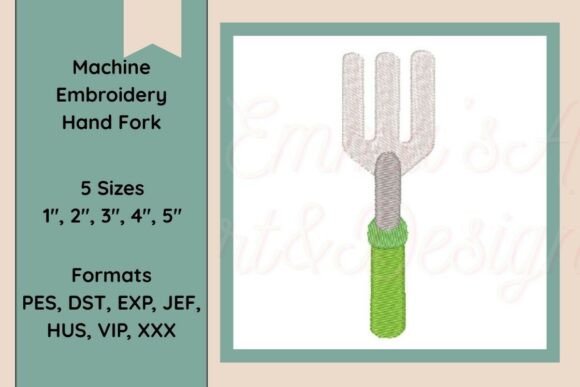
Review: Hand Fork Machine Embroidery Design
As an embroidery designer who has spent years digitizing files for small businesses, I know that not every design is created equal. When a client hands me a file to test for their branded merchandise, I am looking for more than just aesthetic appeal. I am looking for durability, stitch efficiency, and brand clarity. Recently, I evaluated the Hand Fork Machine Embroidery Design, a piece that promises to bring a touch of springtime charm to various projects. For gardeners, plant lovers, and creators of spring-themed items, this detailed gardening tool motif offers significant potential. However, its success in a commercial setting depends entirely on how it is applied.
First Impressions and Visual Personality
The initial visual impact of the Hand Fork Machine Embroidery Design is undeniably friendly and rustic. It does not scream corporate rigidity; instead, it whispers of handmade care and organic growth. This makes it an excellent candidate for brands that want to project warmth and approachability. The design feels decorative yet grounded, avoiding the overly complex details that often plague digital embroidery files intended for mass production.
For a boutique florist or a local bakery specializing in herbal goods, this aesthetic aligns perfectly with their brand identity. It suggests a connection to the earth and manual craftsmanship. However, for a tech startup or a high-end luxury fashion label, this playful, rustic vibe might feel out of place. Understanding the personality of your brand is the first step in deciding if this design belongs in your asset library.
Commercial Applications for Small Business Merch
The true value of any machine embroidery design lies in its versatility across different products. Here is how the Hand Fork design performs in real-world business scenarios:
- Embroidered Patches: This is perhaps the strongest use case. The distinct shape of the hand fork translates well into a patch format. It can serve as a standalone logo for a gardening club or a secondary icon for a landscape company. Patches allow for higher stitch density without worrying about fabric puckering, making the details pop.
- Apron Embroidery: For cafes, florists, or craft studios, staff uniforms are walking billboards. Placing this design on the chest pocket of a canvas apron adds a professional yet personalized touch. It reinforces the idea that the staff are hands-on creators.
- Tote Bag Design: Eco-friendly tote bags are a staple for retail shops. The rustic nature of the hand fork complements natural cotton or canvas materials beautifully. It turns a simple bag into a desirable handmade product accessory that customers are proud to carry.
- Cap Embroidery: While possible, this requires caution. The curved surface of a cap front can distort intricate lines. If used here, it should be simplified or enlarged to ensure legibility from a distance.
Navigating Technical Challenges
While the design is charming, experienced embroiderers know that beauty can sometimes come with technical hurdles. When preparing the digital embroidery file for production, several factors must be considered to avoid costly mistakes.
Stitch Density and Fabric Texture: Detailed outlines can sometimes result in high stitch density. On lightweight fabrics like thin t-shirts or silk blends, this can cause pulling or puckering. It is crucial to test the design on the exact fabric you intend to use. For textured fabrics like terrycloth or heavy denim, the fine details of the hand fork might get lost. In such cases, increasing the satin stitch width or simplifying the underlay can help maintain visibility.
Small Patch Sizes: If you plan to use this as a tiny label on clothing tags or small accessories, verify the minimum viable size. Tiny lettering or thin tines of the fork may merge together if scaled down too far. Always create a printable mockup at actual size to check for clarity before running the machine.
Thread Colors and Contrast: The design’s effectiveness relies heavily on color choice. On dark uniforms, light thread colors are necessary for visibility, but they may show dirt more easily on items like aprons that see frequent use. Conversely, using dark threads on dark fabric will render the design invisible. Test your thread colors against your standard inventory to ensure consistent brand recognition.
Enhancing Brand Identity and Customer Trust
Consistency is key to building trust. Using the Hand Fork Machine Embroidery Design across multiple touchpoints creates a cohesive visual language. When a customer sees the same embroidered icon on their tote bag, their receipt envelope, and the staff member’s apron, it reinforces professionalism. It signals that attention to detail extends beyond the product itself to the entire customer experience.
Furthermore, embroidered items have a perceived higher value than printed ones. An embroidered patch on a jacket feels premium and durable. This perception can justify higher price points for your small business merch. It transforms a simple promotional item into a keepsake, increasing buyer engagement and loyalty.
Practical Designer Notes for Production
Before committing to a large run of commercial embroidery projects, follow these practical steps to ensure quality:
- Test in Black and White: Remove color from your preview to check if the design holds its shape without shading reliance. If it looks muddy in grayscale, it may lack definition in single-color applications.
- Check Hoop Size Compatibility: Ensure the design fits within your standard hoop sizes. If it requires a large hoop, consider if it can be split or resized for smaller items like caps or cuffs.
- Use Proper Stabilizer: The right stabilizer is non-negotiable. For stretchy fabrics, use cut-away stabilizer to prevent distortion over time. For woven fabrics, tear-away may suffice, but test for residue.
- Verify Commercial Licensing: Never assume a file is free for commercial use. Check the license terms associated with the embroidery file to ensure you have the rights to sell items featuring this design.
- Create Client Mockups: If you are designing for a client, provide a realistic mockup showing the design on their specific garment. This manages expectations and allows for adjustments before stitching begins.
In conclusion, the Hand Fork Machine Embroidery Design is a versatile asset for businesses rooted in nature, craftsmanship, and community. It excels in applications like patches, aprons, and tote bags where its rustic charm can shine. However, success requires careful attention to technical details like stitch density, fabric choice, and sizing. By treating this design as a strategic brand element rather than just decoration, small business owners can elevate their merchandise and create lasting impressions on their customers. Always prioritize testing and quality control to ensure that every stitched inch reflects the professionalism of your brand.