Review: Spring Floral Embroidery Design for Craft Fairs
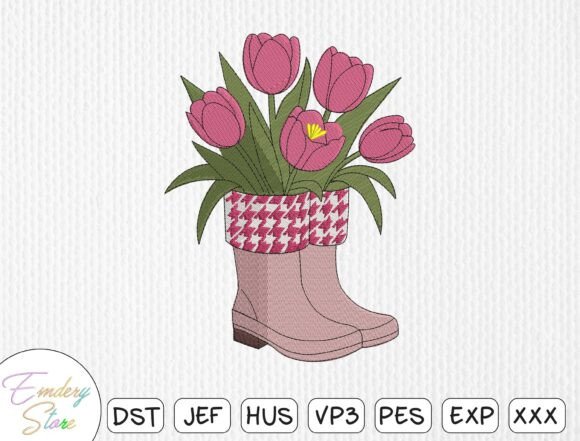
As an embroidery designer who has spent countless weekends behind a booth table, I know that the difference between a browsing customer and a buying customer often comes down to visual impact. When I first loaded the Spring Floral Embroidery Design into my digitizing software, my immediate thought was about its potential as a high-converting craft fair product. This is not just another generic flower pattern; it is a narrative piece. The concept of tulips tucked into rain boots creates an instant emotional connection, evoking feelings of cozy spring mornings and garden freshness.
First Impressions and Visual Appeal
The charm of this design lies in its whimsical yet polished aesthetic. It strikes a balance between cute and sophisticated, making it versatile for various demographics. For a handmade product line, this versatility is gold. The pink tulips provide a soft, inviting pop of color, while the green leaves add necessary contrast and depth. When evaluating a machine embroidery design for commercial use, I look for clarity. Does it read well from three feet away? Yes. The bold shapes of the rain boots anchor the design, ensuring it does not get lost in the fabric texture.
This design feels particularly strong for sellers targeting the farmhouse or cottage-core markets. It is festive without being overly holiday-specific, meaning it can remain in your shop from early March through May. For an Etsy seller or boutique maker, this longevity reduces the pressure to constantly create new seasonal assets.
Product Applications for Maximum Sales
To truly evaluate the Spring Floral Embroidery Design, we must imagine it on actual goods. Not every design works on every item, but this one offers surprising flexibility.
- Tote Bags: This is arguably the best application. A canvas tote with this design centered on the front becomes an instant bestseller. The tote bag design benefits from the vertical orientation of the boots and flowers, creating a balanced composition that looks intentional and premium.
- Aprons: An apron embroidery placement on the bib or lower pocket adds character to kitchen linens. It transforms a utility item into a giftable keepsake.
- Tea Towels: For tea towel embroidery, placement is critical. Ensure the design is scaled correctly so it does not overwhelm the narrow width of the towel. The lush green leaves will stand out beautifully against white or cream linen.
- Embroidered Patches: If you offer iron-on or sew-on patches, this design’s contained shape makes it ideal. An embroidered patch allows customers to customize their own jackets or bags, expanding your market reach.
- Caps and Hats: While possible, curved surfaces require careful hooping. The density of the boot area must be managed to prevent puckering on structured caps.
Production Practicality and Batch Efficiency
For small shop owners, time is money. A design that is difficult to stitch or prone to errors is a liability. The Spring Floral Embroidery Design appears to have a logical stitch path. However, there are practical considerations to address before committing to batch production.
First, consider the stitch density. The rain boots likely require a satin stitch or dense fill to appear solid and vibrant. If the density is too high, it may cause perforation in lightweight fabrics like voile or thin cotton. Conversely, if it is too low, the backing might show through. Always test on your intended fabric. Second, examine the thread colors. The transition from pink to green needs to be smooth. Poor color blending can make the design look muddy. Using high-quality rayon or polyester threads will enhance the sheen of the tulips, making the finished product look more expensive.
Photography is another crucial factor. This design photographs exceptionally well because of its distinct shapes. For your online listings, create a printable mockup or stage real items in natural light. The contrast between the pink flowers and green leaves ensures the image pops on social media feeds, driving traffic to your store.
Technical Considerations and Careful Use
Even the best digital embroidery file requires technical diligence. Here are specific notes for executing this design successfully:
- Fabric Texture: Textured towels can distort fine details. Ensure the leaf veins are not so tiny that they get lost in the terry cloth loop.
- Dark Fabrics: If stitching on navy or black, you may need an underlay or a white base layer to ensure the pink tulips remain vibrant. Without this, the colors may appear dull.
- Hoop Size: Check the required hoop size before purchasing. If the design is large, you may need a 5x7 or 6x10 hoop. Ensure your machine and inventory of blanks support this size.
- Stabilizer Selection: Use a cut-away stabilizer for stretchy fabrics like tote bags to prevent distortion over time. For woven aprons, a tear-away may suffice, but test for stability.
- Small Details: If you plan to scale the design down for small pouches, verify that the rain boot details remain clear. Tiny elements can merge if the resolution is insufficient.
Building Brand Consistency and Value
Incorporating the Spring Floral Embroidery Design into your lineup helps build brand consistency. If your shop focuses on cheerful, home-centric items, this design reinforces that identity. It signals to customers that you curate quality design assets that bring joy. Furthermore, offering this as part of a collection—perhaps paired with a matching bee or butterfly design—encourages multiple purchases.
For commercial embroidery purposes, always verify the license terms. Most designers allow unlimited physical sales but restrict the redistribution of the file itself. Confirm these details to protect your business. By treating this design as a core component of your spring inventory, you create a cohesive booth display that draws the eye and invites interaction.
Final Designer Verdict
The Spring Floral Embroidery Design is a strong contender for any spring collection. It balances aesthetic appeal with production feasibility. To maximize success, start by stitching a sample on your most popular blank. Check the tension, trim the jumps carefully, and press the final piece. Create at least one real mockup for your marketing materials. If the design holds up on a textured tote and a smooth apron, it is ready for your shop. Remember, the goal is not just to sell an item, but to sell the feeling of spring. This design delivers that feeling with every stitch.